Friday, January 31, 2025

Traveling by Word

I have been posting my bookgroup's annual reading slate here since 2013, the year after I began this blog. Last year it was nearly the only thing that I posted. This year it will be the first of, at least, monthly posts. Or so is my intention.

In all those past posts, I think I have pointed out and praised every attribute of the Foreign Authors Bookgroup, this diverse group of women who are brought together by our love of reading and our interest in the wide world around us. We do not exclusively read foreign authors, but our focus is on foreign lands and cultures. Our November meeting is dedicated to nominating books, either fiction or non-fiction, current or classic, which we will then vote on for the year to come. We now have a limit of two nominations each, and I always aspire to read at least some of those which did not make the list.

I am now on the third book of the year, Magdalena, River of Dreams by Wade Davis, an exploration of the river that runs through Columbia, the land, its people and its history. It's an information-dense book that I doubt you would pick up on a whim, but I'm finding it quite interesting. At this age, I have finally come to accept that there are many places where I will never set foot, Columbia being one of them. Yet here I am, traveling both in time and space down this mighty foreign river, all the while comfortably tucked in bed, thanks to the written word.

Saturday, August 31, 2024

Fantasy with Anole

 “Wild: Perspectives in Fiber” was the theme of the 2024 Dallas Area Fiber Artists annual show which was exhibited from July 1 to August 10 at the C.C. Young senior living community where our meetings are held. I reworked an image I had created many years ago for Illustration Friday, consisting of a photo taken in my yard of a Fatsia japonica plant with a background of ferns, plus a photo of a Texas native green anole. 


After a lot of experimentation in Photoshop, I sent the image off to Spoonflower, as I had last year, and had it printed on cotton/linen canvas. Once again, I have to rave about how beautifully all the subtle color and texture of the image is reproduced. I then embroidered the outlines and veins of the leaves with several colors of embroidery floss, using mainly stem stitch and back stitch. I also outlined the anole and gave him a gold bead eye. Mr C made the fame, and I painted it with the same metallic green paint as last year. 

I didn't really break any new ground creativity-wise here, being, for one thing, pressed for time. But I enjoyed making it, and I was glad I participated in the show. Next year I'm promising myself to do something totally different. Well, we'll see...

Wednesday, July 31, 2024

Still reading

And still here. How can it be that an entire year has passed since my last blog post? Is time actually speeding up? It certainly seems so, since I can't believe that I am slowing down. At any rate, I have not abandoned this blog, which, according to Blogger stats, still attracts some readers, although I admit that I write it primarily for myself. The fact that it's “published” also motivates me to continue.

 As I have been doing since the first year of this blog, twelve years ago, I'm sharing the books that the members of my long-time Foreign Authors Bookgroup have chosen for the year. The group goes back much farther than that, and there have been some departures as well as newcomers. We have changed from evening to an afternoon meeting time as most of us are no longer constrained by a work schedule. But our criteria remains the same: fiction and non-fiction by foreign authors or about foreign lands and cultures. 

This year we have more non-fiction than usual. Our August book is one which I am reading for the second time. No prior interest in hieroglyphs is necessary to enjoy The Writing of the Gods: The Race to Decode The Rosetta Stone by Edward Dolnick. It is a thoroughly entertaining book. As the author says “...the saga of the Rosetta Stone is as far as could be from a narrow tale of arcane scholarship in musty libraries.” There are “...stories of archaeological swashbucklers tumbling through ancient tombs; peeks at the first-ever attempts to set down words in writing; excursions into big subjects like the struggle against death and forgetting – and it would be a mistake to forgo those adventures in favor of sticking to hieroglyphs alone.” The wealth of content in the book is presented in such a lively style to make it a real page-turner. I'm looking forward to the bookgroup's discussion next Tuesday.


Monday, July 31, 2023

The Women

Who are these women? I admit to feeling a slight reluctance in appropriating these images, although they are offered free to use on sites such as Pixabay and Pexels, or in the case of the third image, as an asset included in one of the Photoshop Artistry courses I'm taking. There is something slightly odd about staring at and working on a picture of someone who is looking back at you when you have no idea of who they are or why the photo was taken. But I have to say that doing these let me flex Photoshop skills that pictures of flowers and landscapes haven't much called for. 

The Beauty   

In this first image, The Beauty, the woman is indeed a beauty and I did nothing on her face but lighten the color of her lips, and I used the mixer brush to better shape her braid. Her earring was changed by stamping a bit of a lace brush over a base color. I used a Hue/Saturation layer to change and lighten the color of the yoke of her garment. Then I created a pattern with leaf brushes for the rest of the garment; and to make the folds, I painted in shadows and highlights on a neutral grey (dodge and burn) layer. The pattern around her head was done with several of Kyle Webster's foliage brushes on different layers in different blend modes. I finished with Topaz Impression for a more painterly look and added a Photoshop filter texture. 

 MythosIn Mythos, after cropping the picture below her bust and extending the background above her head and to the right, I both cloned and painted in additional hair on top of her head and to the right. Her eyes were enlarged using the Liquify filter. A bra strap showing on her shoulder was cloned out. The tip of the one piece of her necklace that was under the garment was replaced and additional light put on the necklace. I cut out some ivy for her crown and toned it to match the composition. In the background are some barely discernible trees from a winter forest photo. I added the warm colors above originally to relate to her dress which was burgundy, but ultimately I decided to change it to green. There are two painterly textures on the entire piece.

Attraction I probably did the most work on the model in Attraction. First of all, not wanting the tattoo she had all down her back, I found a great Piximperfect video about how to remove tattoos. I also used frequency separation to retouch her skin, especially smoothing out her face, subtly colored her lips and brightened her eyes. Highlights were added to hair with touches of rose-tinted white set to overlay. The background consists of two texture layers from Tangie Baxter, and some French Kiss script. The sheer tulle under her hand is from Foxeysquirrel. Finally I added three butterflies extracted from Pixabay photos.

Friday, June 30, 2023

Flower Power

 The Dallas Area Fiber Artists annual exhibition begins tomorrow, July 1. This is the first time I have participated; Marbled Rose and Popcorn Hydrangea are my entries. 


Toward the end of April, I chose two flower photos which I had taken long ago. In Photoshop I altered colors of the leaves and backgrounds and found that the conté crayon filter produced some interesting effects. Overall I applied a find edges filter and enhanced that with some outlining by hand. To the rose photo in the background, I also added a medieval-style design.

Then I sent them off to Spoonflower to be printed on a fat quarter of cotton/linen canvas. (In case you haven't discovered Spoonflower, be sure to have a look. In addition to having your own design printed, you can choose from a delightful plethora of designs from others and have them printed on a selection of different fabrics or even on ready-made items, such as pillow covers and curtains.) In one week Spoonflower sent back the printed fabric, and it looked terrific!

That was really only the beginning. My initial plan with to hand embroider all the outlines on the leaves and the flowers, emphasize the centers with French knots and sprinkle some beads about. After hours of work on the hydrangea image, I realized that it would take me way too much time to embroider all the outlines, so I became selective. And when I did the rose, I decided to limit the embroidered outlines to the flower itself. It's actually a bit difficult to see all the embroidery as much of it blends in with the printed image.

I listened to the entire audiobook of Barbara Kingsolver's Pulitzer Prize-winning Demon Copperhead and got a good start on Remarkably Bright Creatures by Shelby Van Pelt during my embroidery sessions. As I said to Mr. C, I don't think there is going to be an embroidered flower picture series. But all in all, I'm pleased with these two.

Mr. C made the frames, and I happened to have just the perfect color of metallic green paint.

Today I took them to CC Young, a beautiful senior living community where DAFA holds their meetings, and where the exhibition is being shown. It was gratifying to already receive compliments on my work while everything was being set up. And I enjoyed chatting with other members about their (very diverse) pieces as they brought them in. Can't wait to see the entire show when I go back for the next DAFA meeting in another week.

Monday, May 29, 2023

Beyond the village

Beyond the village

 Unlike with film rolls of the past, where you didn't want to waste your 24 or 36 shots, digitally you can click away (and delete) with abandon. But sometimes you keep a less-than-stellar image because, well, it was a lovely place and you'll probably never be there again. As I did with my view overlooking the town of Château-Censoir where we had stopped on our boat trip down the Canal du Nivernais in France. 

To transform it into the backdrop for this composition, I used Camera Raw in Photoshop, Topaz Impressions and the Paint daubs filter in Photoshop, plus a texture applied to the sky. All this to tone, add contrast and some vignetting, plus give it a more painterly look.

Next, I found a great fox image by JackerKun in Pexels. Jesús Ramirez has an excellent video on how to cut out fur from busy backgrounds on the Photoshop Training Channel. I also used this technique on the two chipmunks (also from Pexels, by Skyler Ewing), although they are so tiny the work on their fur is not apparent. While the fox is looking up somewhat in the original photo, I used Photoshop's Puppet Warp to turn his head and thus his gaze more skyward, and I toned him to blend into his surroundings

The photo of the hawk by Petr Ganaj in Pexels was so sharp that I slightly blurred all but the head to give it a more realistic look in terms of the composition. I also added three birds on the skyline with a bird brush. The last touch after the chipmunks was some detailed bits of shrubbery around them.

As usual, it took me way too long to do. But getting each step, each element just right is so absorbing that time flies by. And I feel so fortunate to get to spend my time doing something that I love.

Tuesday, February 28, 2023

Crafting a portrait - Lady in lace

Lady in lace

 While I hope that this appears to be a painted portrait, it was actually crafted in Photoshop. Since people/faces have rarely been a subject of my digital efforts, it required quite a bit of learning and experimentation and careful attention to detail.


I began with this model shot by faestock from Deviant Art. She already has quite lovely skin, but I refined it even more by using several skin retouching techniques from a video by digital artist and photographer Caroline Julia Moore in one of the Photoshop Artistry courses that I have been taking. I extended the background above her head by cloning and also into the areas where I masked out her hair below her ears.


Next, I “dressed” her in this Irish lace collar from the Costume Institute of the Metropolitan Museum. There are many, many images of all types of garments from different eras which can be copied and used under the Met's Open Access policy. I first extracted the lace from the background and then shaped it to the neck and shoulders of my figure using the Liquify filter.

 The hair proved to be one of the biggest challenges. After watching a YouTube video on how to paint braids in Photoshop, I searched for images of braided hair to copy and was rewarded by a photo of an actual braid in Pexels. I extracted parts of the braid, then shaped them using the Puppet Warp tool. A lot of color toning and overpainting was needed to make them look as if they actually were part of her hair. I found this simple YouTube video on painting hair to be very helpful.

Her pearl earrings and the pearls in her hair were easily painted with just the circular marquee tool and a soft round brush.

The background consists of several textures plus my photos of the vine with the violet flowers (wish I knew what they were!), all in different blend modes. The figure was masked out of all of these because I didn't want any textures on her. There was also toning on the figure and additional shading on both the right side of the background and on the lace.

The final step was to use Topaz Impressions to achieve that painterly look.

I spent a tremendous amount of time on it, I added to my digital skills, and I'm pleased with the result. Time to begin on the next one!


Tuesday, January 31, 2023

In Appreciation

While other activities I once participated in, such as the Skillman Players theater group, are now but memories, the Foreign Authors Bookgroup continues to be an ongoing, much-appreciated part of my life. And I think that most of the other members feel much the same, which I find both gratifying and surprising, because we are such a disparate group of women in many respects, brought together by our love of reading about world around us. I have enjoyed and learned, and more than that, I have gained new insights into my own character and viewpoints from our monthly discussions.

So when an assignment in a digital art course I am taking was to create an original work of photo artistry based on the theme of admiration for a dear friend, I modified it slightly as appreciation for all my friends in the bookgroup. As the assignment suggested, I did have it printed and have just sent a copy to each person in the group. 

We have already begun our 2023 reading slate with a short but moving Irish novel, Small Things Like These by Claire Keegan.  Next up is a French novel which I nominated, The Anomaly by Hervé Le Tellier which won the Prix Goncourt in 2020.  So, come the first Tuesday in February, I will find out the reactions of the group both to my "appreciation" card and to the unusual novel that I selected.  

Here is our complete schedule for the year.  


Saturday, December 31, 2022

Old City Park


Sullivan House

In 1876 it was Dallas's new and first City Park, gracing The Cedars, a fashionable neighborhood of Victorian homes. The 1885 Sullivan House above, decked out for the holidays, once stood nearby. Along with a variety of other historic buildings from the Dallas/North Texas area, it was moved to the park, which for a period of time was called Dallas Heritage Village. Now it's Old City Park again, with free regular admission, and a pleasant place simply to have a stroll on its wooded acres. Below on the left is the 1888 Renner School with a backdrop of downtown Dallas skyscrapers.

Old and new Among the wildflowers


Monday, October 31, 2022

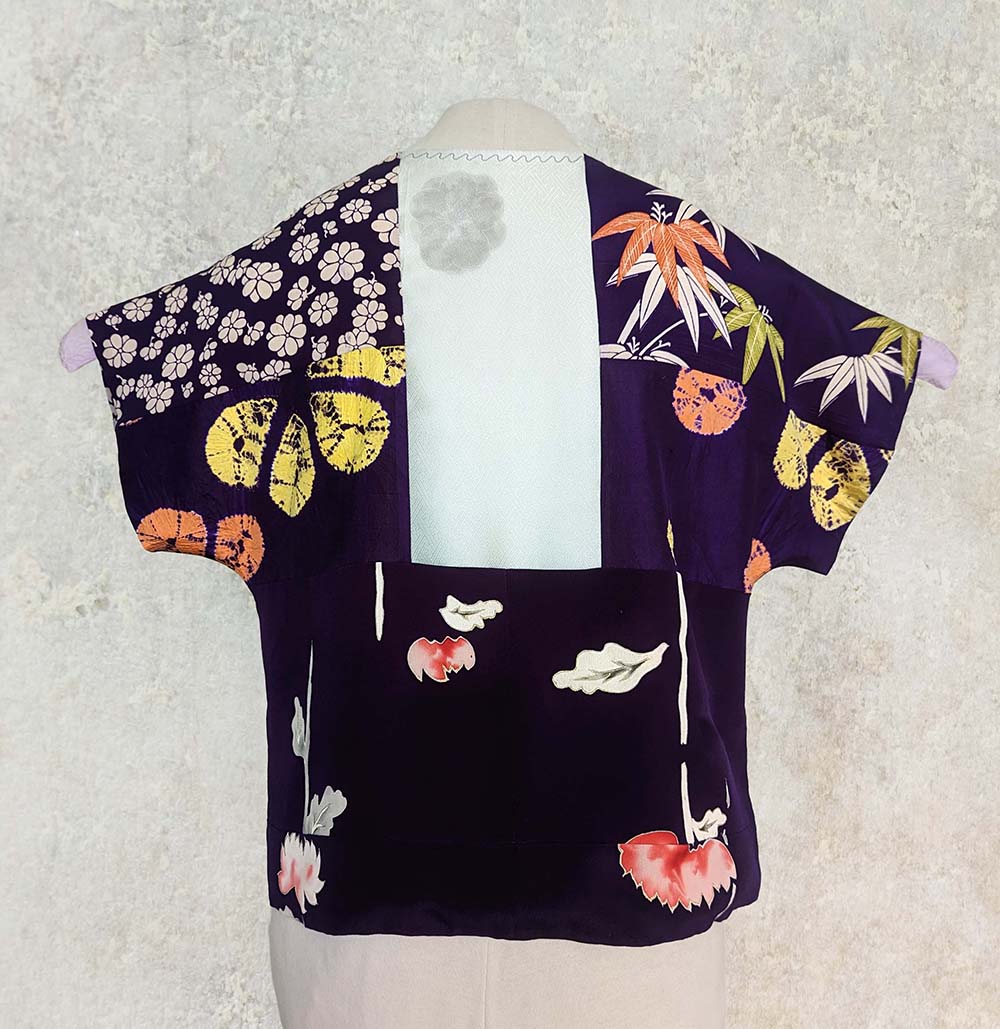
Silk samples top

One dollar bought a little hanger with five or six fabric samples. They had come from a seller of Japanese textiles who was retiring and were being offered at a meeting of the Dallas Area Fiber Artists. Most were gorgeous silks, of which I managed to acquire enough in related purples to piece together this top.

The pattern is adapted from Vogue 8497 by Marcy Tilton. And I didn't have a sample to spare! After deciding on the arrangement of the samples, I sewed them together with tiny one-eighth inch seams to create a whole piece of fabric from which I cut out the pattern. Then I lined the top with off-white silk crepe de chine from Dharma Trading Company.

All the different projects which DAFA members had made from the samples were displayed in a contest at the last meeting. Alas, I did not win a prize, but having this top to wear is reward enough. 


Thursday, September 22, 2022

Second time around

Once the fabric for this t-shirt was a totally different color with totally different designs. And it just wasn't right. Eventually I decided the only solution was to start over. Some yellow swirls refused to be removed, but I think they just add another layer of complexity under the new design.

For my new color, I wanted a pinky peach which I mixed using Deep Orange, Bazooka Pink and Dusty Rose. For the two contrasts I add some Pomegranate and some Nightshade. All of these are Fiber Reactive Procion Dyes from Dharma Trading Company (some colors no longer available), made up into dye concentrates which I apply by mixing with print paste. 

I began by stenciling the small swirls with a stencil I purchased from Michael's. Then without letting that dry, I used a natural sponge to dab a slightly lighter color mixed with a thinner print paste over all the pieces.

The second session was simply stenciling the one-half inch and one-fourth inch squares (cut on my Silhouette Cameo) in the two contrast colors. And that was enough, so, all in all, a fairly simple design to achieve. (Although all that stenciling and dabbing took quite a bit of time.)


The pattern I used is a copy I made long ago of L.L. Bean's Saturday T-shirt, which is a loose, boxy tee, super comfortable for summer. The fabric is a non-clingy cotton jersey from Dharma. It's so much easier to print the individual pieces while they're flat on a table and sew it up afterwards.

Sunday, July 31, 2022

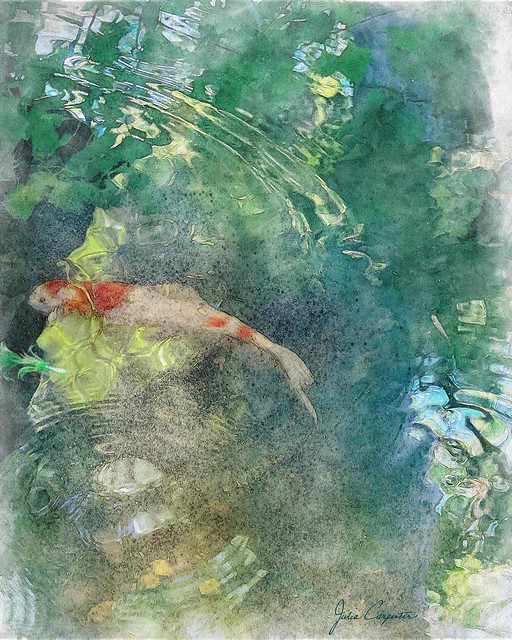
What medium it is supposed to be?

 That's what Mr. C asked me when he looked at my latest oeuvre, Gazing into the pond. Well, I was going for a watercolor-esque effect, but not actually trying to exactly simulate a watercolor. Because digital art has a legitimacy of its own. It is what it is, and mastering its tools is no different than learning to wield pencil or brush and paints skillfully and effectively.

I liked the composition of the original photo with the arc above and the circles of ripples below anchored by the fish in between. But it took color toning, assorted tweaking and, yes, the selective use of a filter, plus some over-painting to achieve the look that satisfied me. In fact, there's such an abundance of options, of ways to color and tone, to sharpen or soften, to add effects, to draw and paint, that just knowing (or deciding) when you've done enough is a skill in itself. 

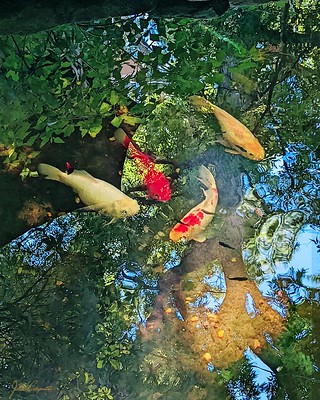
Reflections of summer  

I'd earlier created a much less painterly image with a photo taken at the same time. In that I had liked the intricate detailing of the reflections in the water and chose to emphasize that, but the major noticeable difference between it and the photo is the color that was brought out. 


As you can tell from my images on Flickr, I don't have a distinctive “style.” I love the freedom that digital art offers. I open Photoshop each time with a sense of anticipation. I may have an idea of what I want, but the path to the finish always has some fortuitous surprises. And always I learn more of how to manipulate the fabulous medium of digital art.


Tuesday, June 21, 2022

A simple pleated silk lampshade

I doubt someone seeing this simple pleated silk lampshade on the crystal table lamp between my living and dining rooms would have any idea of the work that went into it. Not to mention all the approach-avoidance angst. The minute I crowned the lamp with the newly completed shade, it seemed like it had always been there. And the flaws that were so disappointing to me as it sat on my work table also seem to disappear.

The original pleated fabric shade had begun to deteriorate some time ago, so when I came upon the book Shades of Light: Making Tailored Lampshades by Ruth De Fraga Gomes, I immediately ordered it. But possessing and perusing the book is rather like buying a pattern and feeling like you nearly already have the garment from it. After my initial enthusiasm, I reasoned that I had a good many other projects demanding my attention, so perhaps I would just buy a shade. 


 You would think that a simple pleated white fabric shade would be easy to acquire, but nowhere could I find the right size and shape, except by ordering a custom shade. So, since I already had the frame, and the detailed instructions, I decided it would be me making that custom shade.

Thursday, March 31, 2022

Welcoming Spring

Back in March 2020 I snapped some pics of a swath of snowdrops. Finally this March I transformed one, using Photoshop and Topaz. Since my original photo was at most mediocre, I began by running the cropped image through Topaz Sharpen AI, but I didn't see a great deal of difference. I especially wanted to bring out the detail in the blossoms, so I used Precision Detail in Topaz Studio. Then I went to Topaz Impressions to create a painterly effect and finished with a Find Edges filter in Photoshop, toning it with a cooling Photo Filter adjustment layer. I added a white border which set off the image, but I still felt it wasn't finished.


For the final composition, I used a technique from one of my Photoshop Awake lessons. The entire image (without the Find Edges layer) was masked out and then selectively painted back in (on the mask) using watercolor brushes. Then the Find Edges layer (blend mode multiply) was put on top. Next I added some watercolor splatters around the edges. And to extend the edges of the image I cloned translucent sections onto the white border. The final touch was a soft border painted with a watercolor brush and blurred.


Snowdrops

 Working on a flower image in Photoshop is always a delight, and I did enjoy creating this.

Sunday, January 30, 2022

We continue to read...

Through the never-ending pandemic, through alarming political turmoil, through our varied personal circumstances, we continue to read. Some of us have traveled, others, including myself, have remained at home. A few no longer even live in Dallas. Most are retired or only work part time, and we have very diverse interests and pastimes. Books are what brought us together.

So, year after year, we continue to read, sharing each month a passage to another time and place. This year began in late 19th century Venice and will end in mid 20th century rural Ireland, with sojourns across the globe along the way.


Thursday, November 18, 2021

In full bloom


I managed to keep the dyeing momentum going and turned out another cotton jersey tank top, bringing together several large flower stencils that I already had made for other projects. Nightshade is what Dharma Trading Company calls that lovely blue-cooled purple of their Fiber Reactive Procion Dye. I also used their Plum Blossom to give some variation on the blossoms. And, of course, Golden Yellow for the centers. 


After the dye had cured, I re-stenciled over the flowers with resist before silk screening on the foliage in Avocado green, so that it would be behind rather than over the flowers. (This was not entirely successful.) This foliage is another design from Dover's Chinese Stencil Design book. The foreword in the book only says that the designs are from a rare collection of Chinese stencils, without giving any specific dates or eras. Old enough, I'm sure, that their creators would be astonished to see their designs being brought to life via Photoshop and the Silhouette Cameo cutting machine that I used to make the silkscreen film.


When all the washing-out was done, the yellow centers were not quite as distinct as I wanted, so I embroidered them with a simple satin stitch, on the front only. 

So, voilà, another new top ready for next summer.  And more dyeing and printing practice to get me ready for my next project...whatever that may be.

Wednesday, September 15, 2021

Rekindling a passion

It's said that you never forget how to ride a bicycle, and I doubt that I would ever forget how to sew no matter how much time went by. Alas, I found that the same was not true of printing with dye on fabric.

I certainly never meant to abandon doing it. From the beginning I found it a delight. With each piece I created, I was eager to learn more, to try out new techniques. And then? Well, other projects, other interests, life... I cleaned the bottles of aging dye concentrates out of the little fridge I had bought just for them, put away the silk screens Mr C had made for me, folded up the table I worked upon, but I always planned to start again, soon.

And finally, later rather than sooner, I have. For this first project, I decided to adapt a design I had used on a couple of scarves to a tank top, so I could concentrate on the process rather than the design. I did a mock-up in Photoshop with the dye colors I planned to use. Then I relied on Color by Design: Paint and Print with Dye by Ann Johnston, which has been my guide for past efforts.

Because some of my dye powders were past their average shelf life, I tested the colors I intended to use; thankfully all were fine.

 The fabric is a sturdy cotton jersey from Dharma. The stencils I already had from the scarf project. The passion flower is an Art Nouveau design by E.A. Seguy from an old Dover Book. I adapted a leaf for an additional stencil. The background design is a motif from Dover Books Chinese Stencil Designs. First I stenciled on the leaves in green and the petals in resist so that they would stay white. Next I stenciled the stamens of the flowers in a dark purple. I also used that color on the stencil of the little sprinkles, some of which I also stenciled with resist.

Next I brushed on the overall color diluted with a thin print paste. Here, in order to make the color pale, I made it too liquid with the addition of urea water which dissolved some of the resist I had put on in the previous step. Finally I silk-screened the Chinese motif randomly over the front and back using a stronger version of the base color. Fortunately the resist that kept the petals white did not completely dissolve as I had feared, but it wasn't as crisp and clear as it should have been. I tried to remedy this by going over the petals with white Lumière paint, but it was difficult to align the stencil perfectly the second time. 

All in all, I'm pleased with the result. These tanks tops are what I wear around the house during our sweltering Texas summers, and I'm glad to have another one to add to my collection. I've already begun working on a design for my next one, even as summer is slowly slipping away. I'm hoping to keep some sort of dyeing project going from now on.  Time will tell...

Sunday, August 29, 2021

The magic of Blend Modes in Photoshop

Jardin du Luxembourg 

For creating digital images as art, Photoshop offers so many features that it would be difficult to single out any particular one as being the most essential or most useful. And what you use also depends on the type of art you're doing. Of course, it's knowing how to use the ensemble of Photoshop's fantastic tools that lets you realize your vision. Or, not infrequently, conjure up an image that comes as a complete surprise.

Blend modes – how a layer interacts or blends with the layer underneath — are basic to using Photoshop effectively and achieving seemingly infinite effects. Everyone who uses Photoshop regularly probably knows the groups of blend modes that darken, that lighten, that affect midtones, etc. But what I find addictive is simply running through all the blend modes on a layer to see what magic might occur.

Which is what more or less happened with the Jardin du Luxembourg image above. 

Friday, July 30, 2021

Fabulous fabric

The Fabric of Civilization: How Textiles Made the World was mired on my endless to-read list until the author Virginia Postrel gave a presentation via Zoom to the Dallas Area Fiber Artists. Such a enthusiastic and entertaining presentation that I immediately ordered the book and proceeded to read it. And then to rave about and recommend it to everyone I could think of.

You needn't be a sewer or someone who works with textiles in any way to appreciate and enjoy this book. You need only be a curious reader for the fascinating lore and surprising historical connections to keep you turning the pages. And to keep you turning to your nearest and dearest, asking “did you know that...?” Such as, did you know that the word “textile” comes from the same Indo-European root — teks — as “technology?” Because, as Postrel explains, “textiles are such an old technology that we rarely think about them.”

In seven chapters on Fiber, Thread, Cloth, Dye, Traders, Consumers, and Innovators, Postrel takes us through time and around the globe, showing us how the need for and the desire for and the making of textiles affected diverse societies and contributed to our modern world. Textiles played key roles in Italian banking in the Renaissance, in the Industrial Revolution, in the development of modern chemistry, in computer programming. And within all these broad categories are many individual narratives of people, some famous, some unknown, who bring life and scale to each chapter.

I am in awe of the extensive research Postrel did and even more in awe of how she turned a work of non-fiction into great storytelling. As I said, she is also a compelling speaker, so I suggest you go to her YouTube channel and let her tell you about the book herself.

Sunday, May 30, 2021

Without a pattern

La Belle aux Fleurs

Landscapes, flowers, nature seem to be my natural digital subjects. But there is always the internal exhortation to try something different, especially when admiring what other digital artists are doing with the human face and figure. For more inspiration, I also collected a Pinterest board of women's images in various artistic styles. Yes, I could do this!

I began by extracting the woman from the background in a Pixabay image by Pat La Paz and giving her a painterly look with Impression in Topaz Studio 2. On my photo of the flowers taken at the Dallas Arboretum, I used copies with Akvis Sketch and Topaz Impression, as best I can remember, since those initial steps were many days and layers and blends modes back at the beginning of the month. Then more blend modes and layer masks to incorporate the woman with the flowers. Plus some background textures from Kirsten Frank.

And then? Frustration! I thought I knew the sort of elements I wanted to add to complete the composition, but nothing worked, nothing looked right. I returned again and again to study other images, to try to plumb their secrets and apply similar effects to mine. And here is where I began to think of the analogy of making a dress without a pattern.

It seemed to me that this was akin to seeing several beautiful dresses and deciding that I wanted to make a similar one. Not an exact copy of any one of them, but something with the same sort of skirt as this one and bodice like that one and sleeves from another. Only there was no such thing as a pattern to show me how to cut it out and construct it. Even as a very experienced sewer, I still need a go-by, especially when trying to make a complex garment. Alas, there was no pattern for what I wanted to do digitally.

Of course, Sebastian Michael's excellent PhotoshopArtistry and Awake: Photoshop Mastery Edition courses contain a wealth of how-to information as well as inspiration. And if specific help is needed, a quick search will turn up a variety of YouTube videos (thanks to which I finally succeeded in painting a new hairdo on the model). But all this instruction then has to be applied to something unique: one's very own creation, like that hypothetical hybrid dress.

Eventually, with the addition of a butterfly from Pixabay, a French letter from the Graphics Fairy and a château from one of my own photos, I declared La Belle aux Fleurs finished. And I'm ready to try another. And another. Just as, over the years, I sewed and sewed until I had an easy confidence in my garment-making skills. I may still need that pattern when making a dress, but I no longer have to rely on it completely or follow it exactly. In fact, the more I have learned to go beyond the pattern, the more my satisfaction in sewing has increased. I only hope it won't take me that long to reach the same point in digital art.